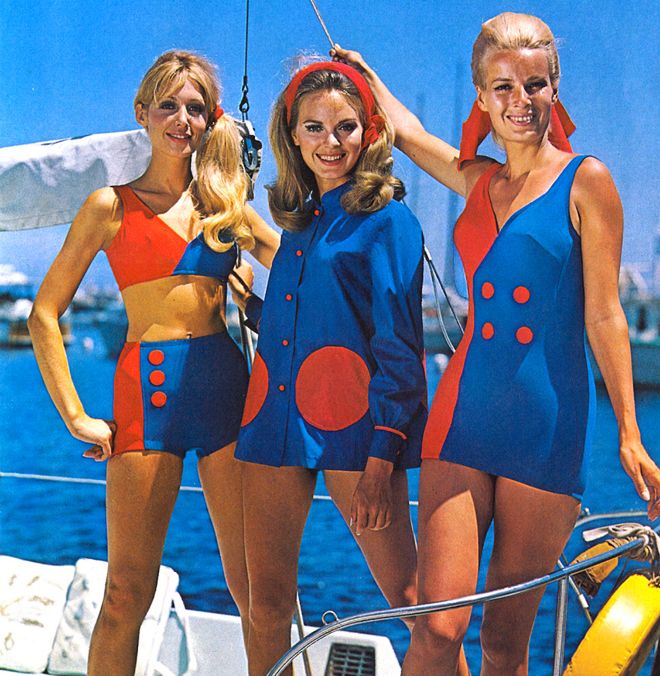
Over a century of swimwear is being celebrated in a new exhibition. Things have been getting smaller.
"In the 50s, all young girls aspired to look like their mothers. In the 60s, the big change was the mothers wanted to look like the daughters," quips acclaimed fashion designer David Sassoon.
Now retired, Sassoon - creator of eveningwear for Princess Diana and other members of the Royal Family - is surrounded by colourful top-end beach clothing from the 1920s and 30s.
He is helping put the finishing touches to London's Fashion and Textile Museum's new summer exhibition, Riviera Style, which looks at how resort and swimwear fashions have changed since 1900.
The rules regarding beach etiquette have changed tremendously he says. "Today you can practically walk on a beach with nothing on."
One of the exhibition's curators, Dr Christine Boydell - a design historian from De Montfort University, Leicester - agrees. The changing styles tell you a lot about morality in the past, she says, "what was permissible to show and what wasn't."
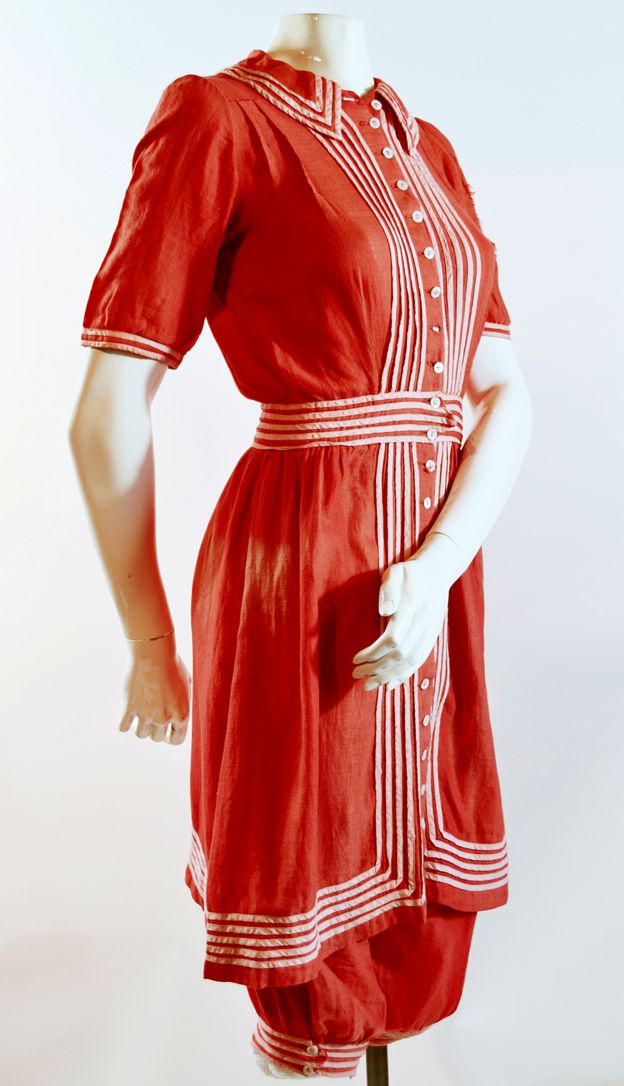
Made from woven wool, they would be heavy and itchy when wet. They covered shoulders and stretched to just above the knee. Matching bloomers would be worn underneath, often with black stockings.
Christine Boydell says for a time bathing corsets would also have been worn underneath - making the whole experience of taking a dip even more uncomfortable.
Men too would also have to be conscious of what was on show.
Boydell explains that in the run up to the 20th Century it was really only men who swam - naked on segregated beaches.
But that soon changed - beaches became mixed and there was a need to cover up. And, like women, men were expected to cover their chests.
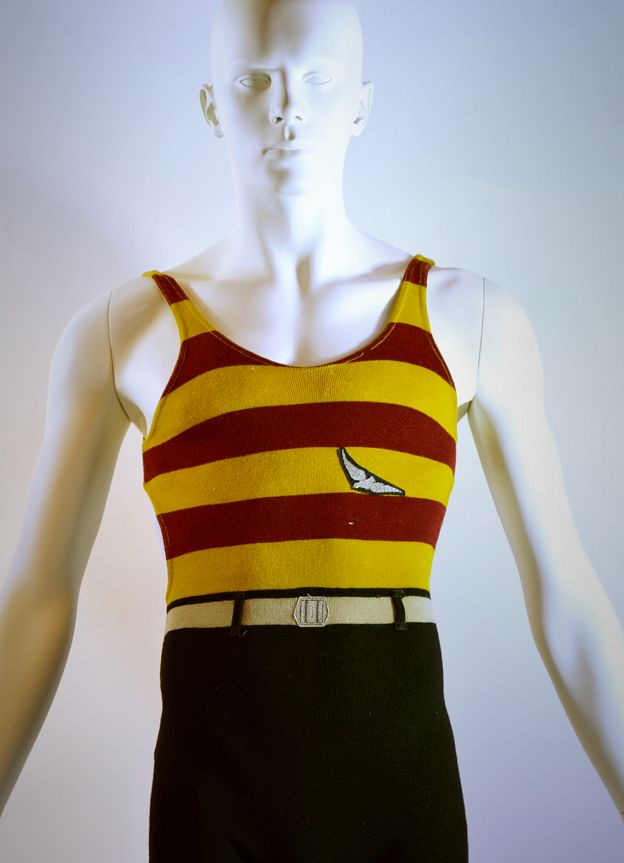
It was knitted - in a tight stitch, similar to that on the round cuffs of modern-day cardigans or jumpers.
The belt was there for a practical reason not just as a style accent, says Boydell. It would stop the garment sagging when wet.


mesh lace thong bodysuit
ReplyDelete